
Contemporary Art unburdened by canons
Artwork that blend traditional techniques with modern aesthetics to inspire and captivate collectors and enthusiasts alike.
About Francois
Francois Gunning is a contemporary French-born visual artist based in Ireland. His distinctive portfolio focuses heavily on coastal landscapes, portraits, nautical and marine life, frequently incorporating physical elements recovered from the sea.
Francois works across different mediums.
Traditional Paintings: Painted in oils, tempera, casein, and acrylics. The canvases are usually stretched on plywood or hardwood, to allow for thin painting on a durable surface. Through combining traditional principles with a rugged, eco-conscious approach to surfaces, and utilising old-world mediums like egg tempera, casein, and oils, the painting prioritizes transparency, rapid layering, and the respect of textures provided by found materials.
This modernised hybrid technique close to tempera grassa, combines casein, egg tempera and oils. Most grounds, paints and mediums are prepared as required, in the studio, to assert control over the quality and durability of the materials used
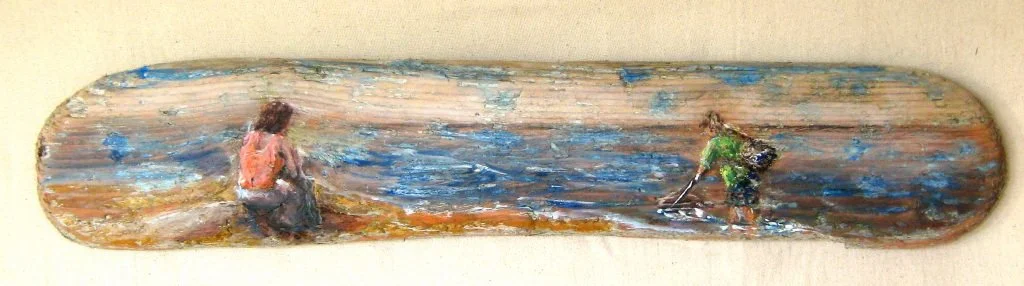
A core element of this body of work involves painting directly onto driftwood worn down and shaped by the sea, allowing the curves and grain of the wood to dictate the compositions. These pieces feature ocean-inspired artwork capturing coastal life, often connecting the picture to the origin of the salvaged materials, like the remains of a shipwreck.
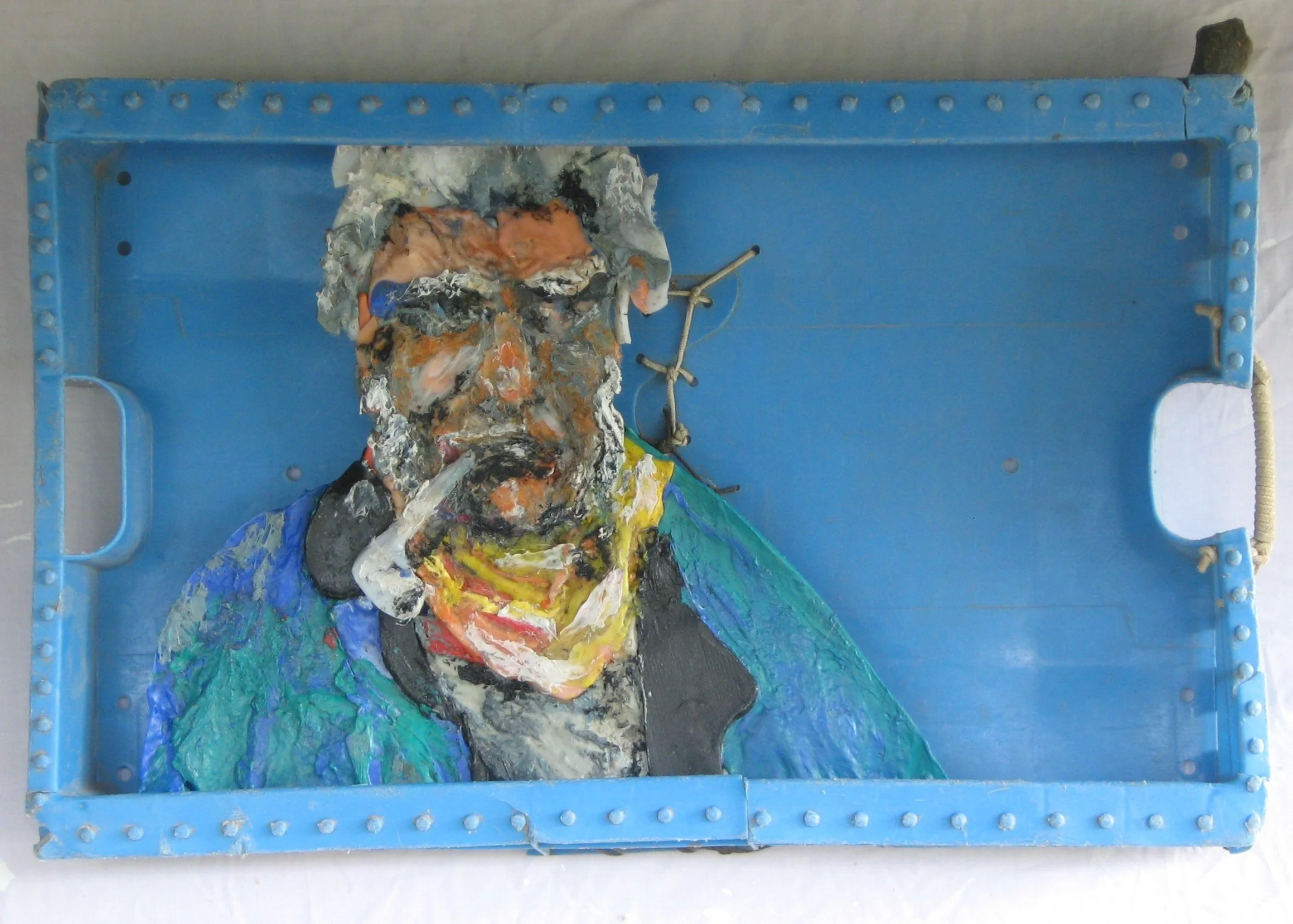
Flotsams: Highlighting environmental issues, these pieces consist of narrative textured artwork made out of beach found plastic debris, fishing nets, and ropes. The nature of the plastic debris utilised demand that new techniques be developed, and in the case of ropes and nettings, a learning of weaving and embroidery is necessary.
Seashells: acrylic or tempera miniatures (such as portraits, swimmers, and boats) are painted directly onto found sea shells. Other smaller shells are assembled as mosaics.
The iconography and style of Francois Gunning are deeply tethered to the maritime world, human vulnerability, and the evolution of found materials. His aesthetic bridges the gap between traditional narrative fine art and modern, eco-conscious folk assemblage; with, amongst other focuses:
The Seafarers: Figures locked in quiet focus—such as a woman at a sailboat’s tiller, a lighthouse keeper looking out a window, or a lookout peering beyond a jib.
Intimate Domesticity by the Shore: Scenes of everyday life on the beach and by the sea
The "Plastic Fishery": Under the guise of a graphic novel these pieces transform toxic modern waste into narrative elements depicting a future (?) plastic fishery. These aim at building narrative elements that mimic historic future seafaring chronicles of the shameless exploitation of the plentiful supply of plastic debris from the sea.
Rather than treating a surface merely as a flat container for a picture, Francois allows the physics of the ground to co-author the artwork. When painting on curragh planking, salvaged hardwood, or mahogany centreboards, the organic surfaces, curves, lines, and knots dictate where shorelines, rolling swells, figures or horizons are placed. Structural elements already embedded in salvaged wood are preserved. For instance, the original copper rivets of a clinker boat's mahogany planking become visual anchors, transforming them directly into the "cannon-mouths" of a ship. Hardwood pitted by shellfish is similarly left un-filled, adding raw physical texture to painted scenes. Likewise, used plastics retain their physical qualities before blending in the picture, loosing their previous incarnations to become choice art materials.
The heavy wreckage assemblages contrast with precise, small-scale work. Using fine brushwork with fast-drying layers, to describe miniature narrative portraits, swimmers, and beachgoers directly into the concave hollows of foraged seashells. The non-porous, smooth texture of the shell requires quick handling to lay down thin, semi-opaque strokes without obliterating the natural qualities of the support.
Francois signs his work with his wife’s surname as a means to acknowledge that without her, none of this would be.
Connect With me
Submit your message . While I do not always answer, I read and pay attention to all contacts.